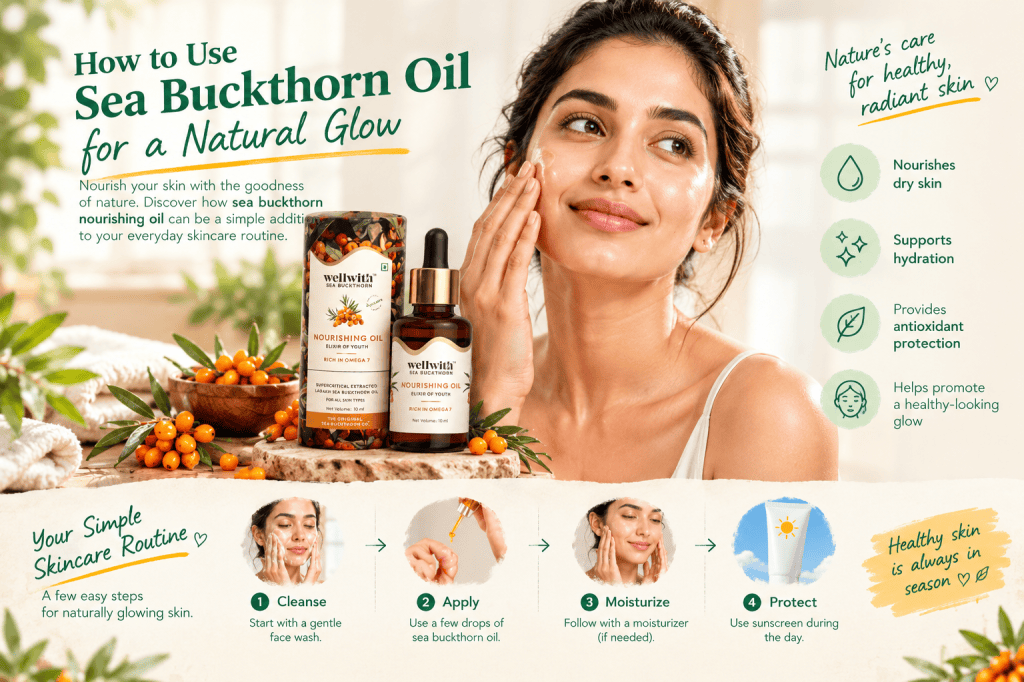
Healthy, glowing skin starts with a skincare routine that keeps your skin hydrated, nourished, and protected. While cleansers and moisturizers form the foundation of daily skincare, facial oils can provide an extra layer of nourishment. One such ingredient is sea buckthorn nourishing oil, known for its naturally occurring fatty acids, vitamins, and antioxidant compounds.
Whether you have dry, dull, or normal skin, adding a nourishing oil to your routine may help improve the feel and appearance of your skin. The key is knowing how to use it, when to apply it, and how to choose a formula that suits your skin type.
What Makes Sea Buckthorn Oil Special for Skincare?
Sea buckthorn nourishing oil is extracted from the berries or seeds of the sea buckthorn plant. It contains naturally occurring fatty acids, including omega-3, omega-6, and omega-7, along with vitamin E and other plant compounds.
These components make sea buckthorn oil an interesting ingredient in skincare formulations.
Some potential skincare benefits include:
- Helps nourish dry skin: Its fatty acids can support the skin’s natural moisture barrier and help reduce the feeling of dryness.
- Supports skin hydration: When used with a moisturizer, facial oil can help soften the skin and reduce moisture loss.
- Provides antioxidant compounds: Sea buckthorn oil contains naturally occurring antioxidants that help protect the oil itself and are of interest in skincare research.
- Adds a healthy-looking glow: By softening dry areas and improving the appearance of skin texture, a nourishing oil can give skin a smoother, more radiant look.
The results depend on the formulation, your skin type, and how consistently you use the product.
How to Use Sea Buckthorn Nourishing Oil for a Natural Glow?
Adding sea buckthorn nourishing oil to your skincare routine does not have to be complicated. A few simple steps can help you use it comfortably and effectively.
1. Start With a Clean Face
Begin by washing your face with a gentle cleanser to remove dirt, excess oil, sunscreen, and other impurities. Avoid harsh cleansing products that leave your skin feeling tight or dry.
Pat your face gently with a clean towel, leaving it slightly damp if that feels comfortable.
2. Apply a Few Drops of Nourishing Oil
Take a small amount of nourishing oil onto your fingertips. Gently spread it across your face and massage using light, upward movements.
Start with a small quantity and adjust according to your skin’s needs. Applying too much oil may leave your skin feeling greasy, especially if you have combination or oily skin.
3. Follow With Moisturizer if Needed
If your skin is dry or feels dehydrated, you can layer a moisturizer with your facial oil. A moisturizer helps hydrate the skin, while an oil can help soften it and reduce moisture loss.
You can experiment with applying moisturizer first and a few drops of oil afterward to find what feels most comfortable for your skin.
4. Use Sunscreen During the Day
If you prefer using facial oil in your morning routine, finish with a broad-spectrum sunscreen of SPF 30 or higher. Sunscreen helps protect your skin from UV exposure, which is important for maintaining an even-looking complexion and preventing sun damage.
Remember that sea buckthorn oil is not a substitute for sunscreen.
When Is the Best Time to Apply Sea Buckthorn Oil?
You can use sea buckthorn nourishing oil in either your morning or evening skincare routine, depending on your skin type and the product’s instructions.
Morning: Apply a small amount after cleansing and before sunscreen, if it layers comfortably with your other skincare products. This can be a useful option for skin that feels dry or rough in the morning.
Evening: Use it after cleansing and alongside your moisturizer as part of your nighttime routine. Evening application can be convenient because you have more time to let your skincare products settle.
If you are new to facial oils, start with evening use a few times a week and observe how your skin responds.
Is Sea Buckthorn Nourishing Oil Suitable for Every Skin Type?
Different skin types can respond differently to facial oils. Choosing the right formula and using an appropriate amount can make a difference.
- Dry skin: A nourishing oil may help soften rough areas and support a comfortable, moisturized feel.
- Oily skin: Choose a lightweight formulation and begin with a very small amount. Stop using it if you notice increased congestion or irritation.
- Combination skin: Apply a small amount to drier areas rather than using the same quantity across your entire face.
- Sensitive skin: Check the ingredient list and patch-test the product before applying it to your face.
If you have acne-prone skin or a history of reactions to skincare products, introduce a new oil carefully. Stop using it if irritation, redness, or breakouts develop.
How to Choose a Good Sea Buckthorn Nourishing Oil
Not all facial oils are formulated in the same way. Before purchasing a sea buckthorn nourishing oil, consider the following:
- Ingredient transparency: Look for a clear ingredient list and information about the type of sea buckthorn oil used.
- Formulation: Consider whether the oil is blended with other ingredients and whether the overall formula suits your skin.
- Texture: A lightweight formula may feel more comfortable for everyday use, while a richer oil may appeal to those with dry skin.
- Packaging: Well-designed packaging can help protect the product from unnecessary exposure to light and air.
- Usage instructions: Choose a product with clear directions and appropriate guidance for facial application.
WellWith’s sea buckthorn nourishing oil can be considered as part of a simple skincare routine for those looking to include sea buckthorn in their everyday self-care. As with any facial oil, check the product details and use it according to the instructions.
Simple Skincare Routine for Naturally Glowing Skin
You do not need a complicated collection of products to care for your skin. A simple routine can help you stay consistent.
Morning
- Cleanse with a gentle face wash.
- Apply a moisturizer suited to your skin type.
- Use sunscreen with broad-spectrum protection.
Evening
- Cleanse to remove dirt, makeup, and sunscreen.
- Apply a suitable moisturizer.
- Finish with a few drops of sea buckthorn nourishing oil if your skin benefits from an extra layer of nourishment.
Along with skincare, staying hydrated, eating a varied diet, and getting enough sleep can support your overall wellbeing.
Final Thoughts
Using sea buckthorn nourishing oil can be a simple way to add an extra layer of care to your skincare routine. Its naturally occurring fatty acids and antioxidant compounds make it a popular ingredient in nourishing skincare formulations.
One of the key benefits of sea buckthorn oil for skin is its ability to nourish and moisturize the skin. Rich in naturally occurring fatty acids, including omega-7, along with vitamins and antioxidants, sea buckthorn oil helps soften dry skin, support the skin’s natural moisture barrier, and reduce moisture loss. Regular use of sea buckthorn nourishing oil may also improve the appearance of dull, rough skin, leaving it feeling smoother, hydrated, and naturally radiant.
Start with a few drops, choose a formula suited to your skin type, and use it alongside gentle cleansing, moisturizing, and daily sun protection. With a consistent and comfortable routine, nourishing oil can become a practical part of your everyday skincare and help your skin look soft, healthy, and naturally radiant.
Frequently Asked Questions
1. Can I use sea buckthorn nourishing oil every day?
Many people can use facial oils daily, but suitability depends on the formulation and individual skin response. Start with a small amount and follow the product’s instructions.
2. Does sea buckthorn oil make skin glow?
Sea buckthorn oil contains fatty acids and antioxidant compounds. Its moisturizing and skin-softening properties may help dry or dull-looking skin appear smoother and more radiant. However, results vary from person to person.
3. Can I use sea buckthorn oil on oily skin?
Yes, some people with oily skin may prefer a lightweight facial oil. Use a small amount and monitor how your skin responds. If you notice clogged pores or irritation, discontinue use.
4. Should I apply nourishing oil before or after moisturizer?
Both methods are possible. Many people apply moisturizer first and then use a small amount of oil to help soften the skin and reduce moisture loss. You can adjust the order based on the product’s texture and how it feels on your skin.
5. Can sea buckthorn oil replace my moisturizer?
Not always. Facial oils and moisturizers serve different roles. If your skin needs hydration, a moisturizer may still be useful alongside your nourishing oil.


Leave a comment